Aeroponic Instruction Manual
Hemp leavesAeroponics is a method of growing cannabis plants that uses no medium for the roots. It’s a style of where the roots are suspended in the air as the and water are delivered via a system that continually mists the roots. This grow method was first discovered as a way to study plants’ root systems in the first half of the 20th century.
Initially there was no thought to utilizing aeroponics beyond root-based research, but this changed over the years and aeroponics has since become a respectable and beneficial way to cultivate plants. How Do Aeroponic Growing Systems Work? As mentioned, aeroponics works by suspending the roots in the air and applying nutrients and water with a fine mist. The dissolved nutrients in the water in combination with the water itself, sunlight, CO2, and oxygen are enough to keep a cannabis plant healthy and thriving as long as the roots continuously receive moisture.To accomplish this, aeroponic systems have a specific setup. The system is composed of two main features: the reservoir and the planter bed. The reservoir is where the water supply is stored and checked for quality and nutrient levels, and the planter bed is where the plants are grown. Planter beds can come in many designs but their foremost features include a misting system, drainage system, and a system for supporting and separating the roots from the plant.
Finally, to connect the two, pumps are used to continuously exchange the water. To start, grown in a medium (e.g. A rockwool cube) will be placed in net cup pots that separate the inside and outside of the planter bed. A collar is then placed around the base of the stalk. This collar helps to prevent the mist in the bed from evaporating or molding the stalk while protecting the roots from getting infected or damaged. From this point, the roots will grow out of the rockwool and through the net cup while the plant grows upward away from the bed.The water used to feed the new plants is delivered through water lines with spray nozzle attachments that insert into the planter bed.
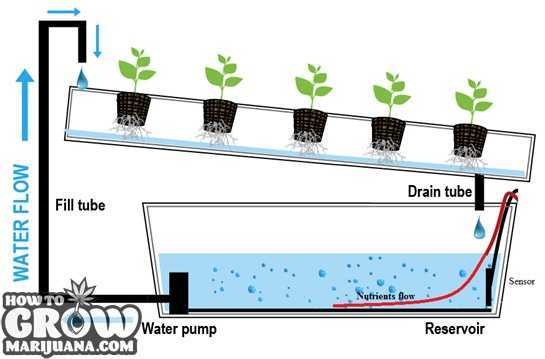
When coming out of the nozzles, the water is made into a fine mist that then blankets the root systems of the plant. The excess moisture collects on the bottom of the planter bed and drains back into the reservoir to be recycled. It should be noted that some systems are designed to use the bottom of the planter bed as the reservoir and then pump the water directly back into the water lines. This style will work fine; however, it is more difficult to check the reservoir without disrupting the roots.You can explore the in Leafly’s product catalog to find some of the materials you’ll need to manage the plants in your aeroponic garden.
Aeroponics Advantages and DisadvantagesWhile there is a laundry list of benefits that come with growing cannabis using aeroponics, this method of gardening is not easy for beginners. Growers should have a vast knowledge about cannabis plants and the adequate funds to produce a quality product from aeroponics. It’s important to realize that this method requires close attention to detail, and therein lies many of its difficulties.Aeroponic growing systems are based off a continual application of mist to the roots, thus requiring that the system stays active 24/7. Power outages, broken pumps, clogged nozzles, and empty reservoirs can all derail your garden. Roots without moisture will start dying within the hour. Systems must be in place to alert you of failures, and someone should be on hand to repair the issues presented, making aeroponics generally a costly means to growing cannabis. Additional hurdles include in the planter box and knowing when and how to properly feed your plants.
However, there are also numerous benefits that come with growing your cannabis with aeroponics. Your roots are in full contact with oxygen at all times and roots thrive on oxygen. Also, the nutrients dissolved in the water are being directly applied to the roots, making them readily available for the cannabis plant’s uptake.Aeroponics allows plants to be placed closer together as they are not fighting for soil territory. The lack of soil also makes for quick and easy harvests and prevents commonly associated with soil from ever entering your cannabis grow space. Finally, aeroponics uses a very limited amount of water as all the water not being taken in by the plants is recycled. Quality of Cannabis Grown with AeroponicsAeroponic systems are known for the quality product they produce. The combination of growing inside and applying nutrients directly the roots allows for the development of large, healthy buds.
Flowers grown with aeroponics are known to blossom with ripe and in high yields, which make for a lucrative and desirable end product. However, sometimes they can lack the complex flavors that can be found by growing in soil.Have you tried growing cannabis with aeroponics before? Share your experience, tips, and questions in the comments section below!
While the concept of the aeroponic system is quite simple, it'sactually the most technical of all 6 types of hydroponic systems.However it's still fairly easy to build your own basic aeroponicsystem, and a lot of home growers like growing in them as well, andeven get really good results using this type of hydroponic system.Likewith any other type of hydroponic system, you can use many differentkinds of materials to build it, as well as many different types ofdesign setups to fit in your space. Your really only limited by thespace you have, and your imagination.Someadvantages to using an aeroponic systems are they typically use littleto no growing media.
The roots get maximum oxygen, and the plants growmore rapidly as a result. Aeroponic systems also generally use lesswater than any other type of hydroponic system (especially trueaeroponic systems).
Also harvesting is usually easier, especially forroot crops.However there are a few downsides toaeroponic systems as well. Besides being a bit more expensive to build.The mister/sprinkler heads can clog from build up of the dissolvedmineral elements in the nutrient solution. So make sure to have extrason hand to swap out when they do clog while you clean them. Alsobecause the plants roots are hanging in mid air by design in aeroponicsystems, the plants roots are much more vulnerable to drying out ifthere is any interruption in the watering cycle. Therefor, even anytemporary power outage (for any reason) could cause your plants to diemuch more quickly than any other type of hydroponic system. Alsothere's a reduced margin for error with the nutrient levels inaeroponic systems, especially the true high pressure systems. What you'll need to build your own basic Aeroponic system:.
Container to hold the nutrient solution (a reservoir). Submersible fountain/pond pump. Tubing to distribute water from the reservoir pump to the mister heads in the growing chamber. Enclosed growing chamber for the root zone.
Mister/sprinkler heads. Water tight container for the growing chamber where the plants root systems will be. Tubing to return the excess nutrient solution back to the reservoir. Timer (preferably a cycle timer) to turn on and off the pump.Howthe aeroponic system operates is a fairly easy concept.
First thepurpose of the roots hang in mid air is so they can get the maximumamount of oxygen that they can get. The high volume of oxygen the rootsget allows the plans to grow faster than they would otherwise, and themain benefit to this type of hydroponic system.Second,there is typically very little if any growing media is used, exposingall the plants roots.
The plants are suspended either by small baskets,or closed cell foam plugs that compress around the plants stem. Thesebaskets or foam plugs fit in small holes at the top of the growingchamber. The roots hang down inside the growing chamber where they getsprayed with nutrient solution from mister heads at regular shortcycles. The regular watering cycles keep the roots moist and fromdrying out, as well as provides the nutrients the plants need to grow.Thegrowing chamber the roots are in should be light proof, and almost airtight.
It does need to allow fresh air in so the roots can get plentyof oxygen, but you don't want water to spill out, or pests to get in.Also you want the root chamber to hold in humidity. Ultimately what youwant is the roots to get plenty of moisture, fresh oxygen, andnutrients.
Razzle Instruction Manual
A a well designed aeroponics system provides a good balanceof all three of those elements to the roots at the same time.Lastly,a major factor in aeroponic systems is the water droplet size. Rootssprayed with a fine mist will grow much faster, bushier, and with moresurface area to absorb nutrients and oxygen with than roots sprayedwith small streams of water like from small sprinkler heads. Thattranslates into the plant canopy growing more rapidly as well.Aeroponic system types are categorized by the water droplet size. There are three types of Aeroponic SystemsLow pressure Aeroponic Systems (soakaponics)Alsotermed 'soakaponics' low pressure aeroponic systems are what mostpeople are familiar with when they think of aeroponics. That's mainlybecause most all aeroponic systems sold at stores selling hydroponicssupply's are low pressure systems. While the low pressure systems workvery nicely, the large water droplet size is much different than in thehigh pressure systems.The main reason the low pressureaeroponic systems are so popular is that they don't require much morein the way of cost or special equipment than other types of hydroponicsystems.
The simplicity and low cost of low pressure systems makes thistype of aeroponic system very attractive to many home growers.Whileyou don't need any special equipment or a special water pump. Thestandard fountain/pond pumps will do just fine.
You do however want apump that's stronger than you would for any other type of hydroponicsystem. That's the main and most important difference. That's becausethe pressure in the system will drop some with each sprinkler head youadd. Fountain and pond pumps don't give a psi (pressure) rating, butthe more GPH (gallons per hour) it can put out closer to the 'max headheight' the stronger (more pressure) the pump has.Youwill want enough sprinkler heads that the spray overlaps, andcompletely covers the entire root zone. Even as the plants get biggerand the root mass gets bigger. As the root mass gets big, it's oftenhard for the spray from the sprinkler heads to penetrate the thick rootmass. If you design your low pressure aeroponic system so the roots aresprayed from above the root mass or near the top of it, the water willtrickle down through the root mass much better than trying to spraythem from below.High pressure Aeroponic Systems (true aeroponic systems)Whilethe low pressure systems are the most common, high pressure aeroponicsystems are the 'true aeroponic' systems.
That's because it takes thehigher pressure (60-90 psi) to properly atomize the water into a finemist with a very small water droplet size. This fine mist allows theroots to get a lot more oxygen than in low pressure systems. Howeverit's more complicated and expensive to build a high pressure aeroponicsystem.